NV Energy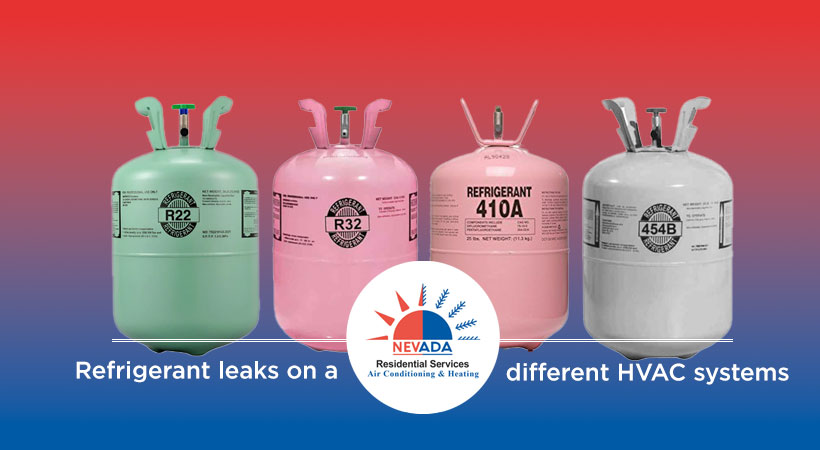
We’ve been working on air conditioning systems in Las Vegas for years now, and if there’s one issue that sneaks up on homeowners more than anything else, it’s refrigerant leaks. They don’t make a big dramatic entrance like a burnt-out compressor or a system that won’t turn on at all. Nope, these leaks are like a silent thief, slowly stealing your comfort and your money.
Here’s how it usually plays out. A client calls us and says,
“My AC’s running, but it just doesn’t feel as cold as it used to.” Or, “My energy bill has shot up, but the house still feels warm.”
When we arrive, we often find:
- Ice building up on the indoor coil or copper lines.
- Long run times—system just won’t shut off.
- Weak airflow that doesn’t feel cold anymore.
- Sometimes even a faint hissing sound near the line set.
These are classic signs of a refrigerant leak. And here’s the tricky part – most homeowners don’t notice until the system is already struggling badly, because the change happens slowly over weeks or even months.
Refrigerant leaks on a different HVAC systems
- Split systems (the classic central AC)
Leaks often come from the indoor coil or the copper lines running to the outdoor unit. I’ve seen a lot of coil corrosion in L.A. homes near the coast, and plenty of line set damage in Phoenix when landscaping or renovations disturb buried copper. - Ductless mini-splits
These are great systems, but their weak spot is the flare connections. If the installer didn’t do the flaring perfectly, that connection can leak over time. And since ductless units hold a smaller refrigerant charge, even a tiny leak knocks them out fast. - Package units (rooftop or all-in-one boxes outside)
Since everything is outdoors, the coils take a beating from heat, rain, and pollution. I see coil leaks and valve leaks all the time on these, especially in older rooftop units in Phoenix strip malls and Los Angeles homes that rely on package systems.
Sometimes people ask us to “just add refrigerant” and call it a day. That’s like pumping air into a tire with a nail still in it, you’ll be right back where you started, only with a lighter wallet. Plus, running a system low on refrigerant is brutal on the compressor, and if that goes? You’re looking at a repair bill in the thousands.
What It Costs to Fix
It's important to note that if the system’s running on old R-22 refrigerant (which is long phased out), the cost of AC repair(fix refrigerant leak or even simply refill it) skyrockets because that refrigerant is extremely expensive and hard to get. In that case, replacement often makes more financial sense than chasing leaks.
The cost of repairing or refilling refrigerant leaks depends on several key factors:
In order to provide at least somewhat basic understanding here’s how we’d break it down for a Las Vegas homeowner:
- Small leak + early detection = cheaper.
- Running the system low on refrigerant for weeks or months can burn out the compressor.
Compressor replacement? $2,500–$4,500 in Las Vegas for a typical residential system. - An older system (10–15+ years, especially on R-22) may not justify expensive leak searches or coil replacements.
In those cases, repair costs overlap with replacement costs. - Hard-to-reach coil: If the indoor evaporator coil is buried in a furnace plenum or the unit’s on a roof, labor jumps way up.
- Larger systems = more refrigerant needed.
A 5-ton system (common in larger homes in Phoenix) might need 10–15 lbs of refrigerant, while a small ductless unit might only need 2–4 lbs.
Since refrigerant is billed per pound, this has a direct impact on cost. - Refrigerant type
- R-22 (older systems): Extremely expensive and phased out—repairs are rarely cost-effective.
- R-410A (common in newer systems): Mid-range cost, widely available.
- Newer refrigerants (R-32, R-454B): Costs are still settling, but they’ll likely be moderate.
- System type is usually the #1 cost factor, because it determines how much refrigerant is needed and how difficult the repair is.
How to Prevent Refrigerant Leaks
The truth is, refrigerant leaks aren’t always 100% preventable, but here’s how you can protect yourself:
-
Regular maintenance
A professional tune-up once a year can catch small issues before they snowball. Here at Nevada Residential Services we use tools that spot leaks long before you’d feel them at the thermostat. Our Annual AC Maintenance plans will help your HVAC system last for many years with minimum investment. -
Keep coils clean
Dirt and debris speed up corrosion. -
Protect line sets
For ductless units especially, using covers keeps UV rays and critters from damaging the copper. -
Choose a solid installer
Most ductless leaks we see come from sloppy installation. A good install is worth every penny. Nevada Residential Services offers a top-notch professional AC Installation services in Las Vegas, NV.